
One of the joys of living in the Manche is having Granville within easy reach. From the Coutances area, this historic Normandy seaside town makes an excellent coastal day out, with its working fishing port, fortified Haute Ville, sandy beach, Christian Dior Museum and rather more opportunities for eating than any sensible person needs in a single afternoon. ⚓
For guests staying with Holidays-Normandy, Granville offers a very different day from the quiet countryside. You can wander between fishing boats and expensive-looking yachts, climb streets that seem personally opposed to comfortable footwear, explore centuries of maritime history and finish beside the sea with something involving butter, seafood or both.
What I like about Granville is that it refuses to be just one thing. Down by the harbour, it's a working port. Up in the Haute Ville, it's a fortified Norman town. Around Plat Gousset, it's a traditional seaside resort. Then, just when you think you've worked it out, Christian Dior makes an appearance and the whole place develops an unexpectedly fashionable side.
You don't really explore Granville in one neat loop. You wander, climb, double back, stop for coffee and get distracted by a view or a shop you hadn't intended to enter. Before you know it, an entirely reasonable plan to spend two hours here has turned into a full day, and nobody can quite explain where the afternoon went. Personally, I think that's a rather good result.
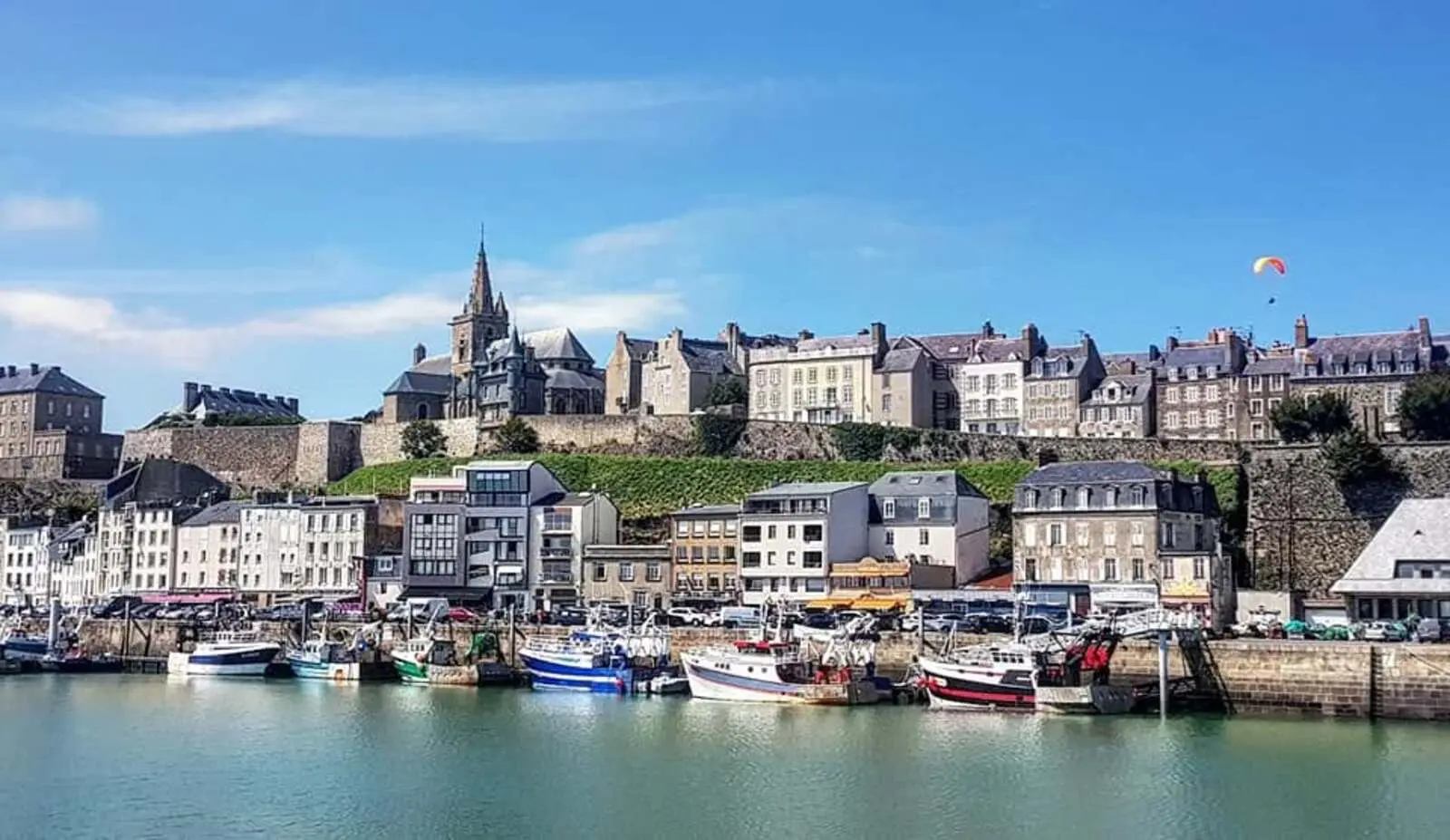
⚓ First Impressions: Port Life and Coastal Rhythm
Granville announces itself through its port. Fishing boats, ferries, masts all clicking in the wind — it feels resolutely a working port first. But then you take a further look and spot the marina, home to some rather luxurious yachts. Practical first, picturesque second. That contrast is very much part of its charm.
Cafés spill outward. Conversations drift past. The tide dictates the tempo. Granville doesn’t rush you — but it does quietly encourage you to keep moving.
From the port, everything fans out naturally: the beach curves ahead, cafés cluster invitingly, and the road up to the old town climbs with purpose, as if saying, “Yes, you should come this way — but I’ll make you work for it.”
🏰 A Town Built in Layers
With each step uphill, the town shifts character. Streets narrow. Stone replaces plaster. Buildings lean inward, shaped by necessity rather than romance. The sea appears and disappears between rooftops, a constant reminder of who has always been in charge here.
Granville’s architecture tells its story quietly. Maritime practicality below. Fortified resilience above. With just a sprinkle of folly that gives it uniqueness. It is a town shaped by trade, conflict, faith, hope and endurance — not aesthetics alone.
🛡️ Haute Ville: Ramparts, Privateers and Terre-Neuvas
The Haute Ville isn’t decorative history. It’s defensive history.
Granville’s ramparts stretch in a broad stone loop — around 450 metres long — encircling the upper town. Walking them is the best possible introduction. From here, everything else makes sense.
Stand in front of the Grand Porte, the fortified gateway into Granville's Haute Ville, then turn around and cross to the little square opposite the former drawbridge. A plaque here tells a rather inconvenient chapter of Anglo-Norman history. In the mid-15th century, Norman forces led by Louis d'Estouteville expelled the English after years of occupation. As a British resident of Normandy, I do find that our historical contribution to local architecture has an alarming tendency to involve being thrown out of it.
King Charles VII subsequently recognised Granville's strategic importance, granting tax exemptions and other privileges that helped shape its maritime future. For anyone who has ever dealt with French administration, the idea of a royal decree making taxes disappear may be the most extraordinary part of the entire story. 🛡️
These privileges laid the foundations for Granville’s rise as a privateer town. Privateers weren’t pirates — they were sailors authorised by the crown to attack enemy ships. Granville’s corsairs were deeply involved in Atlantic trade and the perilous cod-fishing expeditions to Newfoundland.
The Terre-Neuvas were fishermen who crossed the Atlantic to the waters around Newfoundland, often spending months away from home in difficult and dangerous conditions while pursuing cod. This was not the sort of sailing trip where somebody offered you a glass of chilled wine and suggested relaxing on the deck. Their legacy remains an important part of Granville's identity, helping explain its connection to the sea, its working port and its long tradition of looking beyond the Normandy coastline.
Granville’s military importance resurfaced during the Vendée Wars. In November 1793, royalist forces attempted to seize the port in the hope of rallying English support. Outnumbered defenders — aided by civilians sheltering within the walls — held firm. No English ships arrived. Granville endured.
🏘️ Through the Heart of the Upper Town
Cross the drawbridge and wind your way uphill to Place Cambernon, the heart of the Haute Ville. Today it feels calm and contained, but until the mid-20th century it buzzed with stalls, trade and daily life.
At the corner of Rue Cambernon and Rue Notre-Dame, a discreet plaque recalls Granville’s aristocratic connections. Unveiled by Prince Albert II of Monaco, it references the Matignon family — ancestors of the Grimaldis — whose story may have helped inspire Granville’s nickname as the “Monaco of the North.”
👀 The Watch House & Notre-Dame du Cap Lihou
Continue along Rue Notre-Dame and you’ll pass the Maison du Guet. With its turrets and storybook silhouette, it looks medieval — but it’s actually a private seaside home from the early 20th century. Granville enjoys misleading first impressions.
Nearby stands Notre-Dame du Cap Lihou, dramatically perched on the Roc de Granville. Built from Chausey granite and permanently exposed to salt spray, the church faces the sea unapologetically. Inside, maritime devotion is everywhere — ex-votos (offerings left by sailors and families in thanks for survival at sea), sailors’ chapels and magnificent stained-glass windows by Jacques Le Chevallier that are absolutely worth circling the ambulatory to admire.
🌬️ Rue du Nord, Barracks and Big Skies
From the church, head towards the north rampart along Rue du Nord. Windy, bracing and expansive, it offers wide views and fresh perspective. On clear days, Chausey appears on the horizon like a promise.
This area once housed Granville’s barracks, occupied until the 1980s — a reminder that this town’s past involved more boots than beach towels.
🎨 Place de l’Isthme & Seaside Reinvention
Place de l’Isthme marks Granville’s shift from fortress to seaside resort. Divided by a 19th-century moat, it neatly frames that transformation.
On one side of Place de l'Isthme stands the Musée d'Art Moderne Richard Anacréon, often shortened to MamRA. The museum is named after Richard Anacréon, a Granville-born bookseller and collector whose donations helped establish its collections. Inside, visitors can discover 20th-century art, portraits, landscapes, books and literary connections, alongside changing exhibitions. It's a particularly good option if you fancy something cultural without committing to an entire afternoon of reading wall labels.
The museum has seasonal opening hours, so check before visiting. Around Place de l'Isthme, Granville's fortified past meets its seaside-resort identity, with views towards the casino, promenade and grand coastal buildings below. It's an architectural change of mood that happens remarkably quickly. One minute you're considering military fortifications, the next you're contemplating an ice cream. Granville has range. 🎨
👗 Christian Dior: Fashion, Sea Air and Stairs
Granville is the birthplace of Christian Dior, and his childhood home, Villa Les Rhumbs, sits above the sea on the northern edge of town. It is a lovely setting, with a garden overlooking the coastline and a house that looks rather more elegant than most of us can manage after five minutes in the Manche wind.
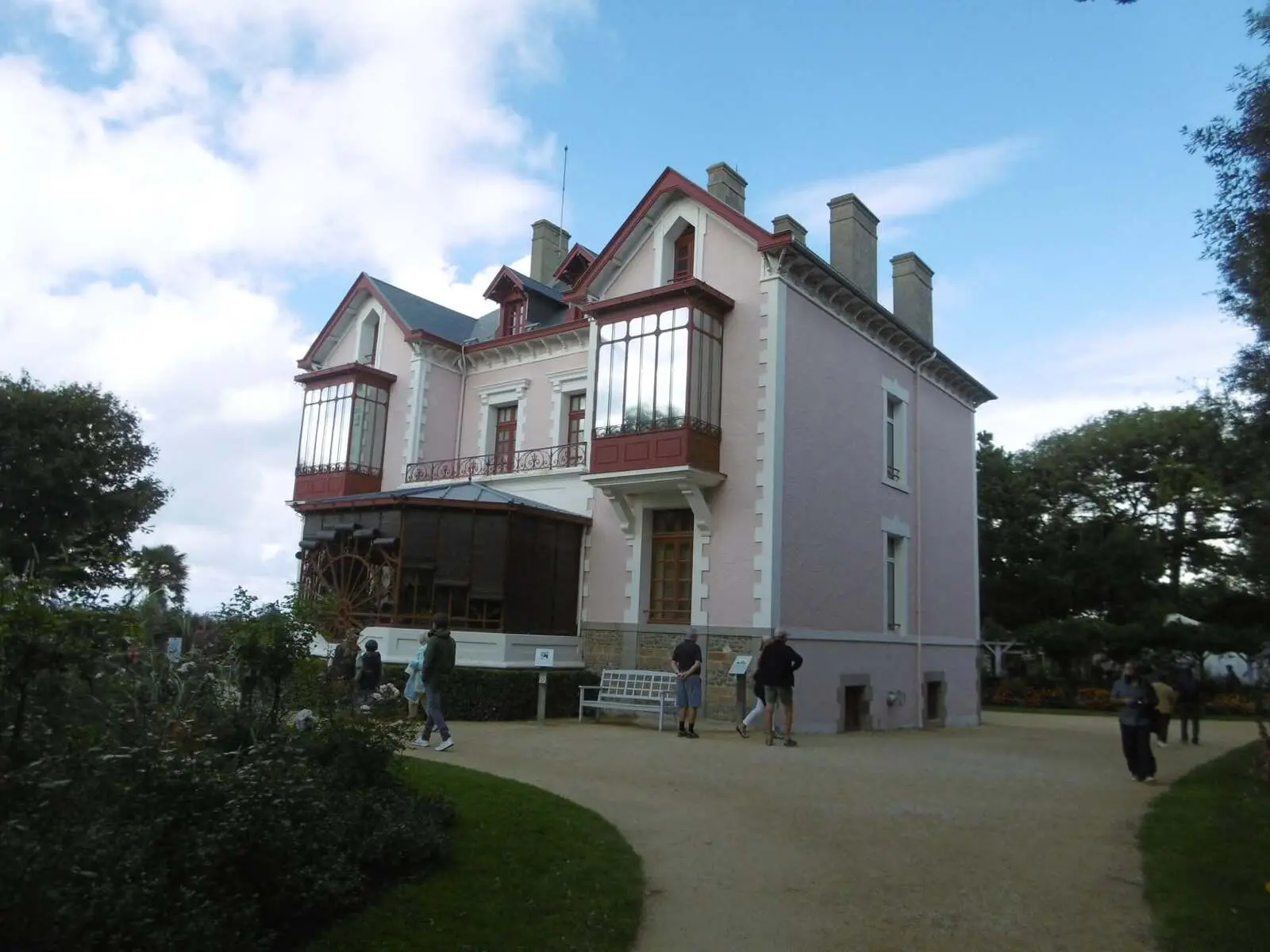
The Musée Christian Dior occupies the villa where the future fashion designer spent part of his childhood. Inside, exhibitions explore his life, designs and artistic influences, with displays changing from season to season. It's an intimate museum rather than a vast fashion warehouse, which makes the experience feel personal.
However, there is an important practical limitation. The historic villa has three levels connected by stairs and is not accessible to wheelchair users or pushchairs. Even for visitors who manage stairs comfortably, booking a timed admission slot in advance is strongly recommended during the museum's opening season.
The good news is that you don't have to visit the museum itself to enjoy the setting. The Jardin Christian Dior, the landscaped garden around the villa, is free to enter and open throughout the year, although its daily opening hours vary seasonally. It's a lovely place to admire the sea views, enjoy the planting and discover another side of Granville.
There's also a seasonal tea room in the garden, La Rose du Rocher, which is a perfectly respectable reason to visit even if your interest in haute couture begins and ends with wondering why designer clothes rarely come with sensible pockets. ☕
And don't overlook the museum's gift shop if you're interested in Dior-inspired souvenirs, books or a little something to remember your visit. It's the sort of place where you can innocently announce that you're only having a look, which is generally the first stage of buying something you hadn't intended to buy. My advice is to enjoy the experience and avoid calculating how many ordinary handbags the designer variety might represent.
Check the official Christian Dior Museum visitor information for current exhibition dates, tickets, accessibility and opening times. The garden and museum operate on different schedules, something worth knowing before setting out.
🏖️ Plage du Plat Gousset: Sea Swimming and Year-Round Life
Plage du Plat Gousset isn’t just a summer beach — it’s Granville’s living room.
Walkers, joggers, families and committed ice-cream enthusiasts share the Promenade du Plat Gousset throughout the year. The beach sits below Granville's casino and seafront buildings, with a broad stretch of sand at lower tides and a distinctly different appearance when the water comes in. It's a proper Norman seaside scene, complete with sea air, people watching and the occasional optimistic outfit choice. 🏖️
One of Plat Gousset's most distinctive features is its 50-metre seawater swimming pool, built in 1960 and filled by the sea. It is an unusual reminder of Granville's long history as a bathing resort. The pool's usability depends on tidal and sea conditions, so check local advice before planning a swim.
Granville also has an established sea-swimming community, including Au Bain Quotidien, an association organising supervised cold-water bathing activities. Winter swimming is not simply summer swimming with a worse attitude: cold water carries genuine risks, so anyone interested should seek appropriate guidance rather than treating a spontaneous plunge as a test of British character.
Even if swimming has absolutely no place in your plans, Plat Gousset is worth visiting for the promenade, beach views and the simple pleasure of watching the sea. A coastal day out doesn't have to involve getting wet to be successful, particularly when the water looks as though it's been stored in a refrigerator.
For those who prefer doing something a little more energetic, Granville and its surrounding coastline also offer opportunities for watersports. Depending on the season, weather, tides and local operators, activities can include sailing, kayaking, paddleboarding and other organised water-based outings. The marina at Hérel is an important centre for local nautical activities, while the beaches around Granville and neighbouring coastal communities provide different settings for enjoying the sea.
Sand yachting is another activity associated with the wider Manche coast, where broad sandy beaches and a decent breeze can be put to considerably more exciting use than simply rearranging your hair. It's worth checking the actual activity location rather than assuming everything operates directly from Plat Gousset. There are few things more disappointing than arriving with great enthusiasm and discovering the activity is several beaches further along.
If you're interested in sailing itself, Granville's traditional vessels, sailing schools and regattas deserve a closer look. We've covered those in our separate sailing guide, leaving this article free to concentrate on enjoying Granville as a coastal town rather than accidentally turning into a nautical training manual. ⛵
⛵ La Marité: A Ship with Stories
Granville's maritime heritage includes La Marité, a magnificent three-masted wooden schooner built in 1923 for the Newfoundland cod fishery. She is one of the last surviving vessels of her kind and has enjoyed several remarkably different careers, including fishing, cargo transport and even life as a floating television studio.
However, don't arrive in Granville expecting to find La Marité waiting to take passengers sailing. Serious damage discovered during maintenance in 2024 left her unable to navigate, and she has been undergoing a major restoration effort away from her usual Granville base.
It would be wonderful to see her sailing again, but restoring a historic wooden vessel is not quite the same as booking a mechanic to replace a windscreen wiper. The work is extensive, expensive and rather more complicated than simply giving her another coat of paint.
For the wider story of La Marité, La Granvillaise and the traditional sailing vessels associated with the port, our separate guide to sailing in Granville Bay explores the town's maritime heritage in greater detail. ⛵
🛍️ Rue des Juifs, Markets and Gentle Chaos
Rue des Juifs is one of Granville's most interesting shopping streets, with independent businesses, art galleries, bookshops and antique shops mixed among its older buildings. It's not the place for a determined dash around a shopping centre. It's somewhere to wander, look in windows and occasionally discover an object you never knew you needed until approximately thirty seconds ago.
Granville's markets are another good reason to visit. The town has regular food and produce markets, including stalls around Cours Jonville and other neighbourhood locations. Depending on the day, you may find seasonal vegetables, local cheeses, fresh produce, clothing and all the usual bustle of a French market.
There are also antiques fairs, brocantes, book markets and occasional vide-greniers throughout the year. A brocante generally focuses on second-hand, vintage and antique goods, while a vide-grenier is closer to a village car-boot sale. Both can be excellent entertainment, although the definition of treasure occasionally depends on how enthusiastically somebody has polished an old saucepan.
The antiques and second-hand markets don't all take place every Saturday, so check the local calendar before planning a trip specifically around one. Granville Terre et Mer publishes brocante and vide-grenier listings, which is much more reliable than turning up and hoping the town has spontaneously filled itself with antique furniture.
For me, this is one of the nicest ways to experience Granville beyond its better-known attractions. You get a feel for everyday local life rather than simply moving between monuments, and there's always a reasonable chance of being distracted by cheese. Entirely understandable. 🧀
🍽️ Where to Eat in Granville: Seafood, Cafés and a Proper Lunch
Granville is an excellent town in which to arrive hungry. Its fishing-port heritage gives seafood a very natural place on local menus, but there's much more to eating here than sitting beside the harbour contemplating a plate of shellfish. 🍽️
There are plenty of places to investigate, including cosy La Citrouille, seafood-focused Le Pirate, lively Zébra 3, relaxed Westie & Wedge, quick and convenient Dwich, ultra-fresh Au P'tit Mareyeur and the traditional Restaurant du Port.
That's just a selection, of course, not an exhaustive culinary census of Granville. Whether you're after a proper sit-down lunch, something quick between attractions or a chance to investigate the local seafood, there's plenty of choice. The real difficulty is deciding where to eat before everybody becomes hungry enough to start arguing about it.
If you're visiting primarily for the harbour, eating around the port makes sense. You can watch fishing boats coming and going, enjoy the maritime atmosphere and investigate dishes featuring fish or shellfish from the Manche coast. Depending on the restaurant and season, local specialities may include whelks, scallops and other seafood caught or landed in the region.
For a slower lunch, the streets around the town centre offer a different atmosphere, with places to sit away from the busiest harbour activity. If you're spending the morning exploring the Haute Ville, it's worth remembering that the historic upper town and the port are at different levels. Choosing a restaurant at the bottom of the hill and then realising your car is still at the top is an excellent way to discover just how large lunch was.
Granville also has plenty of options for visitors who don't want seafood. A simple sandwich, savoury crêpe, salad or something from a bakery can be a perfectly satisfactory lunch, especially if you've already spent the morning walking and plan to continue towards Plat Gousset afterwards.
During weekends, school holidays and busy summer days, popular restaurants can fill up quickly. Check opening times, reserve ahead if you've got somewhere particular in mind, and remember that many French kitchens don't operate an uninterrupted lunch service throughout the afternoon.
Personally, I think a coastal day deserves at least one decent food stop. Nobody has ever become more appreciative of historic architecture because they were hungry and slightly annoyed. And even the most magnificent view improves considerably when accompanied by a good pastry. ☕🍰
🌅 Pointe du Roc: Sea Views at the Edge of Granville
Pointe du Roc is the rocky headland extending beyond Granville's historic upper town, with expansive views over the sea, coastline and nearby maritime landscape. It's a wonderful place to finish a walk around the Haute Ville, especially when the weather is clear and the changing light makes the water look entirely different from earlier in the day.
This is also one of the places where Granville's location really makes sense. The town occupies a prominent position on the western coast of the Manche, facing an enormous stretch of sea and the Chausey archipelago beyond. It's easy to see why generations of sailors, fishermen and people interested in coastal defence considered this spot rather important.
The Pointe du Roc also has military remains from different periods, adding another layer to Granville's history. But you don't need to arrive with a detailed knowledge of fortifications to enjoy it. Sometimes standing somewhere with a bit of wind, a remarkable view and no urgent responsibilities is quite enough.
If you're interested in horse racing, the Hippodrome de Granville is actually located at Bréville-sur-Mer, outside the main town. It hosts race meetings on selected dates and is better treated as a separate outing or an addition to your day by car, not a casual stop on the walk to Pointe du Roc. There's a limit to how much geography you should expect your feet to reorganise for your convenience. 🐎
🚗 Visiting Granville: Parking, Hills, Tides and Accessibility
Granville is an easy town to reach by car from much of the Coutances area, but it's worth understanding the layout before deciding where to park. The fishing port, marina and lower shopping streets sit below the Haute Ville, which occupies the higher ground above the harbour. Plat Gousset beach and the Christian Dior Museum are in other parts of town.
The result is a wonderfully varied day out, but not necessarily a flat one. The Haute Ville has steep approaches, old streets and uneven surfaces, while some viewpoints and coastal paths involve slopes or steps. If you have limited mobility, choose your parking and attractions carefully rather than assuming the whole historic centre is easy to explore on foot.
Granville can get very busy during the tourist season, particularly around the harbour, beachfront and main car parks. And while there are plenty of designated parking areas, finding a space on a sunny summer's day can become an activity in its own right. Not necessarily one you wanted to include in your holiday.
On a pleasant day, we tend to park at the top of the long road leading down towards the beachfront, where we've generally been able to find free roadside parking, and simply stroll into town. Not because we're tight, I hasten to add, but because it's considerably more enjoyable than playing Hunt the Parking Space in a busy car park while everybody else in the vehicle develops helpful opinions about where you should have turned.
It's not a taxing walk, and it makes a pleasant start to the day. You can wander down towards the seafront at your own pace, enjoy the surroundings and arrive in Granville without having spent the previous twenty minutes circling a car park with increasing levels of resentment.
Of course, roadside parking arrangements can change, so always check the current signs and restrictions rather than assuming a space will remain free indefinitely. And remember that the downhill stroll does mean an uphill walk back to the car. Nothing particularly dramatic, but worth bearing in mind if you're travelling with anyone who finds slopes difficult, or if lunch has been especially successful. 🚗
The Christian Dior villa is not accessible to wheelchair users or pushchairs, although its garden can be visited separately. If accessibility is essential to your plans, check the specific route, venue and facilities before travelling. It's better to know about a flight of stairs before you've spent twenty minutes persuading everybody that the climb will be worth it.
Granville's beaches are also shaped by the large tides of the Manche coast. Check the day's conditions if you intend to swim, paddle or explore the shoreline. The beach at Plat Gousset can look remarkably different between low and high tide, and not every exposed stretch of sand is somewhere to wander without considering the returning sea.
Finally, bring a layer even when the forecast looks promising. Granville has a healthy relationship with the wind, and the wind is not especially concerned about your hairstyle. 🌬️
🗺️ How to Spend One Day in Granville from Coutances
If you're planning a day trip to Granville from Coutances or the surrounding Manche countryside, I'd resist the temptation to cram every museum, beach, shop and historic street into a rigid timetable. Granville is much more enjoyable when you give yourself room to wander.
That said, a little structure helps, especially when the town has several distinct areas separated by hills. Here's how I'd approach a relaxed day, allowing time for a proper lunch and the occasional entirely justifiable cake stop.
Morning: The Harbour and Haute Ville
Arrive in Granville in the morning, find suitable parking and start around the working port. Have a look at the fishing harbour and marina before heading uphill towards the Haute Ville. Explore the Grand Porte, Place Cambernon, Rue Notre-Dame, Notre-Dame du Cap Lihou and the historic ramparts.
If you enjoy maritime history, the fortifications and viewpoints deserve time. If you're travelling with children, the views and narrow streets may prove more interesting than an extended history lesson about 15th-century taxation. Know your audience.
Late Morning: Views or a Museum
Depending on your interests, continue towards Pointe du Roc for panoramic sea views or investigate the Musée d'Art Moderne Richard Anacréon if it's open. You don't need to do both, particularly if your morning has already involved a respectable amount of climbing.
Lunchtime: Something Good to Eat
Head towards the port or central shopping streets for lunch. Seafood is an obvious local choice, but bakeries, cafés and more casual restaurants provide alternatives if you'd rather spend less time sitting at a table.
Allow a proper break. Granville doesn't award prizes for the number of attractions visited before two o'clock, and a good lunch is a perfectly respectable part of the itinerary.
Afternoon: Christian Dior or Plat Gousset
For the afternoon, choose between the Musée Christian Dior and its seaside garden, or a more relaxed visit to Plat Gousset beach and promenade. These appeal to different interests, and there's no reason to force everybody into the same plan.
Fashion enthusiasts may want to explore Villa Les Rhumbs, while families and beach lovers may prefer to spend longer beside the sea. The Christian Dior garden itself is worth considering even if you don't visit the museum.
Before Heading Home: Shops, Coffee or One Last View
If you've still got energy, explore Rue des Juifs and the central shopping streets, stop for a coffee or enjoy one last look at the harbour before returning inland.
Alternatively, go home. I mention this because holiday itineraries have a curious tendency to forget that people eventually become tired, hungry or quite reasonably unwilling to climb another hill.
For visitors staying with Holidays-Normandy, there's no need to exhaust everything Granville offers in one trip. You can return for its markets, museums, harbour festivals or a ferry excursion to Chausey on another day. That's one of the advantages of exploring the Manche from a countryside base rather than trying to squeeze the entire coast into a whistle-stop tour. 🌿
🏡 Is Granville Worth Visiting on a Normandy Holiday?
Absolutely, especially if you enjoy coastal towns that still have a proper working life beyond their visitors. Granville isn't simply a collection of pretty buildings arranged around a beach. It's a fishing port, a historic fortified town, a seaside resort, a shopping destination and the birthplace of Christian Dior, all occupying one remarkably interesting stretch of the Manche coast.
I think Granville particularly suits people who like variety. Couples can spend hours exploring the Haute Ville, stopping for food and discovering little shops. Families can enjoy Plat Gousset, the harbour and the seaside atmosphere. History enthusiasts have the ramparts and maritime heritage, while art and fashion lovers have museums and the Dior connection.
It isn't quite so ideal if your idea of a perfect outing involves completely flat streets, effortless parking outside every attraction or a guarantee that the weather will behave itself. Granville has hills, tides, working boats, occasional crowds and a fairly independent attitude towards sunshine. None of that makes it less enjoyable, but it's better to arrive knowing what sort of place you're visiting.
For me, the appeal is that Granville never feels as though it has completely surrendered its identity to tourism. The fishing boats still have work to do, the old town still carries its history and the seaside remains somewhere local people use throughout the year. The expensive yachts and fashionable museum simply add another layer to the story.
And honestly, any town where you can discuss medieval fortifications in the morning, enjoy a proper lunch, spend the afternoon beside the sea and finish by looking at something connected to Christian Dior has achieved a rather impressive range of activities without asking you to drive to four different destinations.
Staying with Holidays-Normandy gives you a useful balance between that coastal activity and the quieter Manche countryside. You can explore Granville for the day, return to your accommodation afterwards and enjoy the freedom of planning another outing without changing where you're staying.
It's also worth giving Granville more than one visit if you have the time. The Chausey Islands deserve a separate ferry day, while the town's maritime festivals, markets and sailing traditions can easily provide a reason to come back. There's no need to attempt everything at once, particularly if your feet have already submitted a formal complaint about the Haute Ville.
And there's something rather satisfying about arriving back in the countryside after a full day in Granville. Shoes off, drinks poured, feet given a well-earned rest and the inevitable conversation about which part of the day everybody enjoyed most. Usually followed by the discovery that somebody has bought something in a little shop and is now attempting to justify it as an essential holiday purchase.
That coast-and-countryside contrast is one of the things we particularly appreciate about this part of the Manche. You can spend the day among boats, busy streets, restaurants and sea air, then come back to somewhere peaceful without feeling obliged to stay in the middle of everything. And if your feet have survived the Haute Ville without complaint, they deserve some recognition. Possibly a medal. More realistically, a comfortable chair and another drink. 🍷
So yes, Granville is well worth including in a Normandy holiday. Go for the harbour, history, beaches, shops and food. Stay long enough to be distracted by something unexpected. And do yourself a favour: wear comfortable shoes and leave space for cake. 🍰
If you'd like to explore Granville and the surrounding Manche coast while enjoying a peaceful countryside base, Book Direct with Holidays-Normandy and discover our accommodation and availability. 🌿
Useful Reading
Chausey Islands from Granville – Ferry, Beaches, Walks & Island Wildlife
Sailing Granville Bay – Traditional Boats, La Granvillaise & Maritime Heritage
Granville Harbour Events – Sea Festivals, Traditional Boats & Seafood
Granville Carnaval – The History & Traditions Behind Normandy's Famous Carnival
Granville Terre et Mer – Official Visitor Information, Attractions & Local Events
Musée Christian Dior – Exhibitions, Tickets & Garden Information
Granville Museums – Richard Anacréon Museum & Current Exhibitions